MackCollier.com

  • Blog
  • Mack’s Bio
  • Work With Mack
    • See Mack’s Work
  • Buy Think Like a Rock Star
  • Book Mack to Speak

July 6, 2010 by Mack Collier

Understanding why Social Media works, in less than 3 minutes

Recently I saw a special on Pixar’s movies, and the documentary included the following scene from Toy Story 2:

After the video, the doll explained “You never forget kids like Emily and Andy.  But they forget you…”

The film’s director, John Lasseter, explained that if you saw this you didn’t think of these items as toys, but you believed they were real.  How easy is it to watch that video and think ‘Aw she got left behind!’

Pixar does a wonderful job of taking inanimate objects, and making them seem ‘real’ and more human to us.  This is a big reason why their movies work, because when it’s easier for us to view the characters as ‘real’, then it becomes easier to connect with them, and easier for us to become interested in the story that they are a part of.

And if you think about it, this is the exact reason why social media works for companies.  It makes companies ‘more human’.  Social media has the power to transform behemoth companies into an organization of people just like us.  When I was at #DellCAP a few weeks ago, I asked the group of ‘fans’ of Dell the reason why they chose to evangelize the company.  I explained that I wasn’t sure if I was an evangelist for Dell, but if I was, it wasn’t because of the products they sell.  It’s because of the people I have come to know that work at Dell.  And those connections have been formed via social media.  So if it comes down to my next computer being from Dell or Compaq….well thanks to social media, I already have several friends at Dell, and can’t name one person at Compaq, so guess who probably gets my business?

Just as Pixar makes inanimate objects ‘more real’, social media is making companies of all sizes ‘more human’.  Which makes them more like me, and easier to connect with, easier to trust, and easier to justify doing business with.

Not sure where all this fits into the ROI equation, but it’s a real benefit, right?

Share this:

  • Share on X (Opens in new window) X
  • Share on Facebook (Opens in new window) Facebook
  • Share on LinkedIn (Opens in new window) LinkedIn
  • Email a link to a friend (Opens in new window) Email
  • Share on Reddit (Opens in new window) Reddit

Like this:

Like Loading...

Filed Under: Blogging, Social Media, Social Media 101

July 1, 2010 by Mack Collier

5 smart ways to create additional content for your company blog!

How many of you have considered starting a blog for your company, but really have no idea how you could blog on a regular basis?  I get it, most bloggers have this problem, hell I constantly struggle with getting posts out on a regular basis and keeping the content fresh here.

But over time, many bloggers have learned how to either repurpose existing content, or to create new content that can be distributed via multiple social channels.  Here’s some ideas for taking content that your company is already creating, and using it on your blog.

1 – White papers.  Or case studies, or research papers.  You’re likely already sharing these with your non-blog audience, why not turn them into blog posts for your blog?  Did you write a white paper on ‘5 Ways the Cattle Industry Can Modernize For the Next Decade’?  Then why not turn that into a 5-part series of posts?  Maybe update the content a bit, add a tweak here and there, and you’ve gotten a couple weeks worth of blog posts right there!

2 – Internal Power Point presentations.  Some of these will definitely have content that you don’t want to share publicly, but if it’s fair game, add them to SlideShare, then embed them on your blog!  Each deck can be a separate blog post!  Just add a quick explanation, and there you go!

3 – Video interviews with company executives and customers.  This is how Robert Scoble made a name for himself at Microsoft.  He went around Microsoft interviewing the people that worked there, and blogged it.   The videos were remarkably effective in letting Microsoft’s customers ‘get to know’ the people that worked there.  You could do the same thing for your executives as well as customers!  The videos could not only be embedded into posts on your blog, they could also be housed on your YouTube channel!

4 – Industry events and conferences.  Oh you can create a TON of content at events that can benefit your blog and other social media efforts!  First, you can take pictures.  Those pictures can then be posted to Flickr, or Twitpic, or Facebook, or…..in a blog post!  Next you have video, you can create a ton of video about the event itself, and also you can interview company execs about the event, or thought leaders in the industry and speakers at the event!  Finally, you can write a blog post recapping the event itself!  THEN when you write that post recapping the event, you can also use the pictures and video you shot during the event!  Now you start to see why bloggers love attending social media conferences, eh? 😉

BONUS:  If you have a Twitter account, you can live-tweet the event!  Another favorite among conference attendees!

5 – Answer questions from your customers.  Many websites have a section or contact form where you can ask a question about the company, it’s products, or both.  Mine these questions for potential blog post ideas!  And when possible, mention the customer that asked the question you are answering, and link to her site or blog!  This just increases the chance that she will comment on your post AND promote the post to HER social network!

So there you go!  That’s 5 quick and easy ways to take existing content that you’re already creating, and use it for new blog posts.  Seriously, between these 5 ideas, couldn’t you get at least one more post a week up on your blog?

BTW if your company has been reluctant to start blogging simply because they aren’t sure where to get content from, show them this post.  Then I bet you can start brainstorming and come up with even more ways to leverage existing content your company is creating, into additional blog posts!

I want to thank CK for this post idea, and if you are a B2B company that needs help with social media and/or mobile marketing, definintely check out CK’s blog!

Share this:

  • Share on X (Opens in new window) X
  • Share on Facebook (Opens in new window) Facebook
  • Share on LinkedIn (Opens in new window) LinkedIn
  • Email a link to a friend (Opens in new window) Email
  • Share on Reddit (Opens in new window) Reddit

Like this:

Like Loading...

Filed Under: Blogging, Social Media, Social Media 101, Uncategorized

June 23, 2010 by Mack Collier

Number of Twitter followers is the most overrated metric in social media

Seriously, it’s total bunk.  I know because I spend WAY too much time tracking my referral traffic from Twitter, and the people that send that traffic here via tweets and RTs.

Two examples of how # of followers can be deceptive:

1 – Several months ago a member of Twitter with 70K followers tweeted a link to one of my posts.  I got a grand total of 3 visitors from that tweet.  I checked, and the guy was following 80K people.  When you try to follow everyone, you usually end up following no one.

2 – Last year, @ShannonPaul RTed a link to one of my posts.  Shannon had around 10K followers at the time.  Her RT led to an additional 600 visitors to my blog that day.  After Shannon’s tweet, a ripple affect started, as people within her network started RTing her tweet, which led to more RTs in their networks.  But the chain reaction started because Shannon was well-connected to her network.  They trusted her and the content she linked to (like my post). So even though Shannon’s network was 14% the size of the guy with 70K followers, her network sent 600 referral visitors, while the guy with 70K followers only sent 3.

This is why I think there is WAY too much emphasis placed on number of Twitter followers that a person has.  Especially when attempting to determine that person’s level of influence.  From what I’ve seen, it’s far more important to see how closely connected a person is with their Twitter network.  If you have a Twitter network of 150 close friends, your effective reach is likely much larger than a person that has 10,000 strangers following her.  I know that when certain people, like Shannon or @BethHarte RT a link to my blog, that I am about to get a flood of traffic.  Because Shannon and Beth are both highly connected to the people they follow.  Roughly 66% of their tweets are replies, so they are constantly interacting with the people that follow them.  That leads to stronger bonds and connections.

So if # of followers doesn’t count, how do you define influence and authority?

Look, I’m not saying how many followers or subscribers or friends you have is totally worthless in determining how much influence a person has.  But it shouldn’t be the only metric you examine when trying to decide if someone has established trust and influence with their network.

For example, last year I worked with a client to create and execute a blogger outreach strategy to promote a webinar that client was producing.  In deciding which bloggers to reach out to, we looked at two key areas:

1 – Total readership of the blog.  This could include number of subscribers, or number of visitors.

2 – Level of interaction on the blog.  How many comments is the blogger getting, and is she replying to those comments?

We placed a far greater premium on the level of interaction, when deciding which bloggers to reach out to about being involved in the webinar.  Because we wanted bloggers that had actually connected with their readers.  I remember in one case we purposely did NOT contact a particular blogger that had almost 100K subscribers, because there was almost no interaction on their blog.  And in another case, we reached out to a blogger that had a far lower number of subscribers, but there was constant interaction on their blog.

The end result was that signups for the webinar exceeded the client’s goal by 100%.

Really when you boil it down, level of interaction and how connected you are to your network almost always trumps the SIZE of that network, when it comes to determining influence via social media.  Over a year ago I had a well-known blogger ask me why my blog posts always got more comments than his (despite him having 10X the traffic of my blog).

I told him “Because I can tell you the first name of almost every person that comments on my blog, the name of THEIR blog, and what they do for a living. Oh, and I thank them. And they know I mean it.”

Numbers of followers/friends/readers matters, but in my opinion how connected you are to them is even more important in determining influence and reach.

Share this:

  • Share on X (Opens in new window) X
  • Share on Facebook (Opens in new window) Facebook
  • Share on LinkedIn (Opens in new window) LinkedIn
  • Email a link to a friend (Opens in new window) Email
  • Share on Reddit (Opens in new window) Reddit

Like this:

Like Loading...

Filed Under: Social Media, Social Media 101, Social Networking

June 21, 2010 by Mack Collier

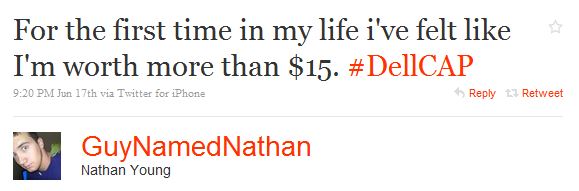
Teaching a Brontosaurus to run; My review of #DellCAP


Last Monday, as the driver approached Round Rock and Dell’s HQs, he informed me that “I’ll be taking you to Building #1.  That’s where Michael Dell is!”  Unfortunately, Michael was out of the country last week, so I didn’t get a chance to meet him.

However, when we arrived at ‘Dell’s campus’, the driver explained that there were 37 buildings.  That when it hit me; whatever good works Dell is hoping to accomplish via social media will have to permeate and take hold in all 37 buildings.  And that’s just in the world HQs, Dell has offices in several other cities around the world.  That just drove home the enormity of a company as large as Dell trying to introduce a ‘new’ way of communicating with customers, and via a new set of channels.

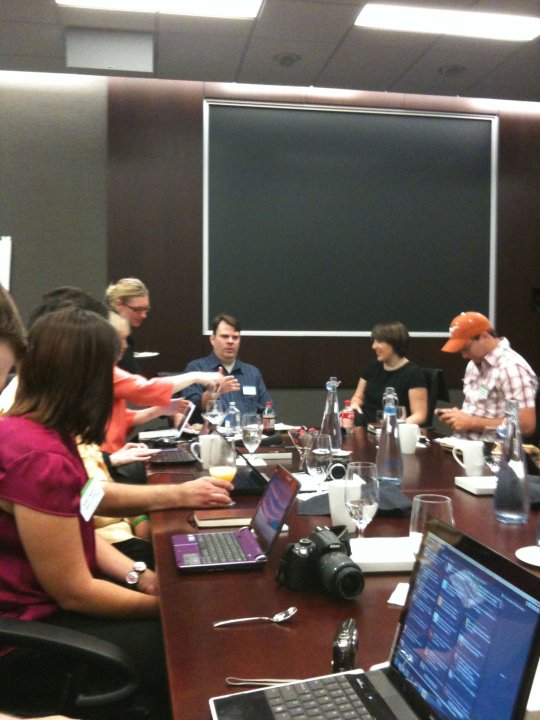
Yet Dell has been using social media to communicate with its customers for at least 4 years now.  That effort took a very brave step forward last week, when Dell hosted its first CAP Days.  CAP stands for Customer Advisory Panel, and you can get more background on the event here, which was spread out over 2 days, involving Dell interacting directly with 30 of its most passionate customers.  I was hired by Dell to help them plan the event, and moderate it both days.  I wanted to share some of what I learned from being involved in the project.

Prior to the event, Dell sent out surveys to all 30 participants to try to get a better feel for what issues were most important to them.  These results would then play a large role in determining the structure of the topics to be covered for both days.  On the first day, Dell met with 15 customers that had had a negative experience with Dell’s products or service (or both), and had used social media to voice their displeasure.  Since customer service had been a problem area for several of the participants, it dominated discussion during the day.  At first, many of the participants were able to share their negative experiences, or ‘vent’ about what had happened to them.  Then later in the day, the discussion turned toward companies that provided exceptional customer service, and ideas were given for how Dell could improve their own efforts.

I noticed two things that surprised me a bit, from both the customers, and Dell employees, during the first day of CAP.

Several times I heard the customers explain that even though they had been involved in a negative experience with Dell, that they wanted to see Dell succeed, and they were happy to be involved with #DellCAP.  One participant even asked me at one point ‘So did Dell think we were going to be the antagonists?’  I’m not sure Dell knew what to expect, but I think they were thrilled with the honest and helpful information they got from the participants.

And on the Dell side, I was surprised a bit that there was very little ‘PR speak’ (almost none, actually), and that the employees present at each session, were honestly listening and processing what the customers were telling them.  I lost count how many times I heard a Dell employee say “Ok so based on what you’ve told us so far, what if we tried to do this? Would that work for you?”  It showed the customers that Dell was listening, and taking their problems seriously.

The second day featured 15 or so Dell evangelists, and 3 hours of the most enjoyable conversations I have ever had in the last 5 years of being involved in social media.  Picture this: I got to lead a discussion on branding, marketing, customer evangelism, and social media with Dell’s Chief Marketing Officer Erin Nelson, Michelle Brigman; Senior Manager of Customer Experience for Dell, social media geniuses like Liz Strauss, Susan Beebe and Connie Bensen, and a dozen or so Dell evangelists.  It was an amazing experience, and possibly the highlight of the week for me.

Also, the morning sessions perfectly illustrated the value that such an event can hold for companies.  A portion of the morning session on Day Two focused on customer service (This had been a VERY hot topic during Day One’s chats as well).  The general sentiment being expressed by the #dellCAP participants was that they loved Dell’s products, but the customer service, especially when it was outsourced to another country, was letting them down.  Dell’s participants explained that the company purposely outsourced a good deal of customer support overseas for consumer products, in order to keep the price of the laptops and desktops lower.  Dell seemed to be telling the participants that this was a conscious choice because they believed that most customers weren’t willing to pay higher prices just to get better service.

But the participants mostly agreed that they WOULD be willing to pay more for a desktop or laptop, if they knew they would receive exceptional customer service if they had a problem with it.  This seemed to be a marketing disconnect for Dell, and the feedback from #DellCAP participants was no doubt invaluable to the company.

And in the end, I think the true value for Dell came from them getting a chance to interact directly with their customers.  Honestly, I was a bit worried that Dell might be using this as a one-off event to simply ‘build some buzz’ online.  But I noticed as soon as the sessions started on the first day that Dell’s participants were listening, and then probing the #DellCAP participants with follow-up questions, based on the feedback they were getting from them.  And of course, when Dell’s CMO Erin Nelson kicked off the second day, that removed any doubts as to whether or not the C-Suite was taking this initiative seriously.

I’ve always said that perhaps the smartest thing a big company can do is connect directly with its most passionate online customers, and Dell did exactly that with #DellCAP.  I was beyond excited to be a part of it, and cannot wait to see what the next steps are.

BTW, this event has generated a ton of feedback on blogs, etc.  I wanted to close by listing some of these posts and videos, so you can see for yourself what everyone thought.  And if you were at #DellCAP, what did you think?  What did you like, what did you dislike?  What would you like to see Dell do moving forward?

Dave’s review of #DellCAP Day One for Fast Company

Allen’s review of #DellCAP Day One

Lauren’s video review of #DellCAP Day One

Vance Morton’s review of #DellCAP on Direct2Dell

Sarah’s #DellCAP Day Two review

Liz Strauss’ #DellCAP Day Two review

Susan’s #DellCAP Day Two review

Dell’s Flickr sets of #DellCap Day One, and Day Two

BTW, each #DellCAP session was ‘visually recorded’ by the fantabulous Sunni Brown.  Dell will be sending us digital copies of the work she created during #DellCAP, but this shot from Susan gives you an idea of her work

Share this:

  • Share on X (Opens in new window) X
  • Share on Facebook (Opens in new window) Facebook
  • Share on LinkedIn (Opens in new window) LinkedIn
  • Email a link to a friend (Opens in new window) Email
  • Share on Reddit (Opens in new window) Reddit

Like this:

Like Loading...

Filed Under: Blogging, Social Media, Social Media 201, Twitter, Uncategorized

June 10, 2010 by Mack Collier

Does your company need a social media evangelist? Why not hire a customer?

That’s exactly what Bruce’s Yams did.  If you follow @MissDestructo on Twitter, you know she is kinda crazy about Bruce’s Yams (in much the same way I am kinda crazy about Dr Pepper, so I don’t judge).  Well her friends on Twitter noticed this, and thought she would be the perfect candidate to work for the company!  So much so that they started a campaign to get Bruce’s attention and hire the gal!

And it worked. Amber (@MissDestructo’s secret identity) was contacted by Bruce’s Yams about handling their social media presences, and before you know it, Bruce’s Yams was on Twitter, managed by @MissDestructo.  Amber created a video explaining how this all came about:

My Bruce’s Yams Social Media Story. from Miss Destructo on Vimeo.

After watching the video and checking out the Bruce’s account on Twitter, I noticed something very important.  Amber is speaking as a ‘real-person’, and a fan of Bruce’s Yams first, and a marketer second.  This is big, because so many companies turn their social media efforts over to employees that are marketers trying to sound like real people.  Amber’s approach is much more personable, and as such, it makes her much more effective in actually connecting with customers.  Thanks to hiring Amber, Bruces is now speaking in a voice that’s much easier for the average customer to hear, and connect with.  Because it sounds like their voice, not the voice of a marketer trying to use Twitter to push links to press releases from the company’s website.  We respond better to messages that are spoken in a voice we can relate to, and understand.

So if your company is looking to create social media presences on certain sites or using certain social media tools, doesn’t reaching out to an existing evangelist that’s already an expert in using that tool, make a lotta sense?  Personally, I think it’s much easier to take an existing customer evangelist that’s an expert on Twitter, and teach them the business side, than it is to take an existing employee, and teach them how to use Twitter (for example) as an effective communication tool.

PS: If Bruce’s Yams had turned its Twitter presence over to an internal employee, and the company had created a video to promote its Twitter account, think it would have looked like Amber’s?

Share this:

  • Share on X (Opens in new window) X
  • Share on Facebook (Opens in new window) Facebook
  • Share on LinkedIn (Opens in new window) LinkedIn
  • Email a link to a friend (Opens in new window) Email
  • Share on Reddit (Opens in new window) Reddit

Like this:

Like Loading...

Filed Under: Social Media, Twitter

June 9, 2010 by Mack Collier

Are you tracking your blog’s stats in real-time?

A fair number of you probably use Google Analytics for your blog’s stats.  GA is great for tracking information about your blog, and the trends that emerge from users interacting with your content.

But GA doesn’t give you real-time information on your blog.  For example, let’s say your blog averages 10 visitors an hour.  But let’s also assume that in the first 15 minutes of this hour, it’s suddenly gotten 237 visitors.

Obviously, something has happened to trigger that huge spike in traffic.  But if you are only using Google Analytics to track your blog’s stats, it will at best be a few hours before you can find out what is happening NOW to trigger a traffic spike.

This is where you really need a way to track your blog’s statistics in real-time.  There are several sites that will track your blog’s stats in real-time, for free.  I use Site Meter, and it installs almost exactly like Google Analytics does, you simply sign up for a free account, and add a small bit of code to your blog’s template, and you are done.

But the BIG reason why I love Site Meter, because it shows me what sites/sources are SENDING traffic to my site.  Here’s an example:

That’s a screenshot of the last 20 visitors here.  Now I’m not getting as much traffic so far today (mainly because I haven’t posted since Monday), but I can quickly see that those circled visitors all came from the same source.  That source ended up being a link that a Twitter user shared with his followers:

Notice that Tom linked to my post here, but didn’t mention me in the tweet.  So unless I was actively checking my referral traffic via SiteMeter, I would have probably never caught this.  And what’s worse, I checked Tom’s Twitter profile and found out he was following me and I was NOT following him!  So I quickly remedied that, and left this tweet:

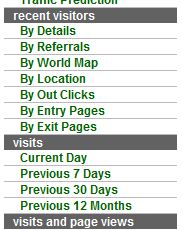
So this is a quick example of the importance of checking your referral traffic via SiteMeter.  Here are some of the options I use the most:


Those options can give you a ton of real-time information about your visitors.  For example, if you just wrote a post about Kodak’s social media efforts, you can click on Details and it will show you if any of your recent visitors are coming from Kodak.com.  Or if you are attending an event in Tulsa, Oklahoma, you can use Location to see how many people from Tulsa are checking out your site.  Or Outclicks is a good one to see how visitors left your site.  If you just wrote a post asking visitors to subscribe, and you see most of the recent visitors are leaving via the link to subscribe via Feedburner, that’s a good thing!

So while I think Google Analytics is invaluable in tracking your blog’s statistics, for real-time information, I use SiteMeter.  Now you don’t have to use SiteMeter, there are other similar free services such as StatCounter, that more or less give you the same information.

Any other fans of SiteMeter?  Or StatCounter?  What do you use to get real-time information on your blog’s visitors?

Share this:

  • Share on X (Opens in new window) X
  • Share on Facebook (Opens in new window) Facebook
  • Share on LinkedIn (Opens in new window) LinkedIn
  • Email a link to a friend (Opens in new window) Email
  • Share on Reddit (Opens in new window) Reddit

Like this:

Like Loading...

Filed Under: Blogging, Social Media 101, Social Media Monitoring, Uncategorized

June 7, 2010 by Mack Collier

The one simple change that boosted my email subscribers by 650%

The prime real estate on your blog is the area called ‘above the fold’.  This is the area of the blog you see when you arrive there.  If you have to scroll down your blog to find something, it is considered ‘below the fold’.

As a result, you want to think carefully about the content that’s ‘above the fold’ on your blog, because there’s no guarantee that a visitor will scroll down your blog.  And simply put, content that’s above the fold is more likely to be viewed/clicked on than if it is below the fold.

To illustrate this point, I recently moved the area for my email subscriptions, and feed subscriptions via RSS.  Up until May 15th, the ‘Mack Live’ section was at the top of the 1st sidebar, with the ‘Subscribe by Email’ graphic just underneath that, so that a visitor would actually have to scroll down to fill out the form.  The area to subscribe via RSS was under it, completely below the fold.

So on May 16th, I decided to move both the email and RSS feed subscription areas to the TOP of the blog, or above the fold.  Here’s the results:

In the 22 days since moving the email subscription form to the top of the blog, I’ve gained 45 email subscribers.  To put that into perspective, it took me 150 days, from December 17th 2009, to May 15th 2010, to gain 45 email subscribers when the form was BELOW the fold.  And for the 22 days prior to the move, I added a mere 6 email subscribers, thus the 650% increase in email subscribers by moving the email subscription form above the fold.  Now I did start asking for readers to subscribe via email during my Twitter experiment for about a week in the posts, but that started on the 17th of last month.  I moved the email subscriber box up on the 16th, and picked up 3 new email subscribers that day, where I had picked up only 4 in the previous 15 days.

As for new subscribers via RSS, according to Feedburner, that’s increased by roughly 20% since the 16th.  And email subscribers are factored into that growth.

This again, shows the value of tinkering with your blog, or ABT – Always Be Testing.  And it shows that you need to consider the layout of your blog, where you put your calls to action, and the type of calls to action they are.  For example, at the top of the far right sidebar, I have an area where you can click to get a quote on consulting services.  I almost never get any clicks here, even though the email subscription form to its left is clicked often.  These are obviously very different calls to action, but in about a week I am going to swap the two, and the track the differences I see in both.  In theory, I would think the far right sidebar would be a better place to have the ‘Get a Quote’ section, since it’s how your eye tracks before it leaves a page, but I don’t know for sure.  So I’ll test it.

You should too.  Look at your blog, especially if it’s a business blog, and notice where your calls to action are.  I am constantly hearing from bloggers that they want more subscribers, and in most cases, they either don’t have a way for readers to subscribe to their feed, or if they do, it’s buried below the fold.  Here’s a quick and dirty way to improve your blog’s performance based on the position of your calls to action:

1 – Identify the key metrics you are tracking to determine your blog’s success.  It could be subscribers, or comments, or sales generated.

2 – Identify the calls to action associated with the metrics you track.  And this might be a good time to get some, if you don’t have any.

3 – Note the location of those calls to action on your blog.  If they are below the fold, that means a lot of people probably aren’t seeing them at all, and they should be above the fold.

But above all else, TINKER with your blog.  This is how you learn, by breaking stuff.

Share this:

  • Share on X (Opens in new window) X
  • Share on Facebook (Opens in new window) Facebook
  • Share on LinkedIn (Opens in new window) LinkedIn
  • Email a link to a friend (Opens in new window) Email
  • Share on Reddit (Opens in new window) Reddit

Like this:

Like Loading...

Filed Under: Blogging, Social Media, Social Media 101

June 3, 2010 by Mack Collier

How to set up Google Alerts for your business or company in 5 minutes!

If your company is looking for advice on getting started with social media, one of the first things you will likely hear is to start monitoring your company and brand.  And you’ll probably hear that you should ‘Set up Google Alerts for company and business mentions’.

But what if you have no idea what that means?  Then read on, as I’ll walk you through what is a very simple, but very beneficial process for your business.

First, you can set up Google Alerts through several different search sources, but for the purposes of this post, I wanted to focus on Google Blog Search.  If you click on that link, you’ll be taken to a page that looks very similar to this:

Now, I want to search just for mentions of my name, so I search for “Mack Collier”.  This is a very fundamental search tip, but by putting Mack Collier in quotation marks, Google Blog Search will give me results that include the exact phrase ‘Mack Collier’.  Where if I searched for simply Mack Collier, it would show me all results that included the words ‘Mack’ and ‘Collier’.  So if you know you want to search for an exact phrase, put the query in quotation marks, and you’ll get much better results.  Here’s what the screen looks like now:

That might be a bit hard to see, but notice that at the very top of the results, Google adds this site, as well as my other blog, The Viral Garden!  But if you scroll down to the end of the first page of results, you find this:

Ah ha!  Now we’re cookin’!  That gives me the option to take those results and create an email alert (This is normally what people mean by a ‘Google Alert’) for the results, or I can search Google News for the same term, add a blog search gadget to my Google homepage, or (and this is the one I like), subscribe to the results via Google Reader.

Let’s first look at creating an email alert for this term, when I click on Create an email alert for “Mack Collier”, I see this:

On the right, you see a box with 5 different input windows.

The first is for the term you want to create the alert for.

The second box is a dropdown menu where you select the source you want the results to come from.  The choices are ‘Everything’, ‘News’, ‘Blogs’, ‘Video’, and ‘Discussions’.

The third box is another dropdown menu where you tell Google how often you want it to email you results.  Your options are ‘As it happens’, ‘Once a day’, and ‘Once a week’.

The fourth box is where you set the length of the email, and your options are 10 or 50 results.  Keep in mind that if you are getting a decent amount of results for your search term, you may need to get more frequent email updates in order to catch all the results.  For example, if you want to set an email alert for the term ‘iPad’, and you only want to see 10 results per email AND you only want to get one email a week, well you are going to miss a LOT of results.

The fifth and final box is where you specify what email address you want the results set to, or if you want them set to a feed.  We’ll cover subbing to results via a feed in a moment.

Set the options you want, and you’ve just created your first Google email alert!  Piece of cake, right?  At first, you’ll probably start out by just searching for your company name.  But quickly, you’ll probably want to branch out and create email alerts for specific products you sell, or maybe key executives.  Then you might want to start getting alerts for your competitors as well.

Then one day you realize your inbox is under attack from all these freakin’ email alerts!!!

Is there a better way?  I think so, it’s called subscribing to these results via feed.

So how do you do that?  First, sign up for Google Reader (which is free, but you’ll need a gmail account, which is also free).

Now remember when we searched for “Mack Collier”, and one of the options at the bottom of the page was ‘Subscribe to a blog feed for “Mack Collier” in Google Reader’?  That’s what we want to do now, instead of creating an email alert.  What this will do is send the results for the term “Mack Collier” directly to my Google Reader, as they happen.

When I click on ‘Subscribe to a blog feed for “Mack Collier”‘, the search results then are shown in Google Reader, and reader asks me if I want to subscribe to these results:

That’s it!  Then as new results come in for that search terms, the feed results in Google Reader will show up in bold.  Here’s a screenshot of my Reader and some of the blogs I am subscribed to:

Note that some of the feeds are in bold, and these have a number after them. Such as Servant of Chaos (2).  That tells me that since Servant of Chaos is in bold, that there are new entries from that blog that I haven’t read yet.  And the (2) tells me that there are 2 posts that I haven’t read yet.

Once you become familiar with Reader you’ll really love it, I think.  You can not only have your alerts sent there, but of course you can subscribe to blogs and read them there as well.

Now as a monitoring tool for your company, what type of alerts should you set up?  I think your focus should be on three areas:

1 – Company-centric search terms.  Such as your company name, prominent products and brands, as well as key executives.

2 – Competitor-centric search terms.  Same as above, but for your top 2-3 direct competitors.

3 – Industry-specific terms.  Use this as a way to get a sense of trends in your industry.

Also keep in mind that with Reader, you can create separate folders for each of these areas, in order to better organize your efforts.

Does this post help?  I just know that so often we mention ‘oh just set up Google Alerts’, but to companies that are new to all this social media stuff, they may have no idea what a Google Alert is, or how to set one up.

So now you do 😉

BTW I am constantly writing Social Media How-To posts like this, so if you’d like to make sure you always get my updates, please consider subscribing!  Thank you!

Share this:

  • Share on X (Opens in new window) X
  • Share on Facebook (Opens in new window) Facebook
  • Share on LinkedIn (Opens in new window) LinkedIn
  • Email a link to a friend (Opens in new window) Email
  • Share on Reddit (Opens in new window) Reddit

Like this:

Like Loading...

Filed Under: Blogging, Social Media, Social Media 101, Social Media Monitoring

June 2, 2010 by Mack Collier

Overcoming the curse of Hi-Res Blogging

Kathy Sierra has often talked about the idea of Hi-Res learning.  The idea being, as you learn more about a topic, you begin to see and notice things that people that are new to the topic, overlook.  For example, if you are an architect, you notice the lines of a building, the characteristics that define the structure in certain ways.  While all I notice are 4 walls and a roof.

And after almost 5 years, I think I could qualify myself as a ‘hi-res blogger’.  But that’s often a problem for me, and the actual blogging process is much more difficult for me than it was when I started.  The reason why is that I now KNOW what a good post and a good post title should look like.  I know (usually) when a post I’ve written will be valuable to the reader, and when it might not be.  So I am finding that the biggest problem I have in blogging isn’t writer’s block, it’s in writing posts that are ‘good enough’ and that I feel will be valuable to you guys.  So often I get an idea for a post, but once I start fleshing out the post, I realize that I can’t make it worth your time, so I scrap it.

But I’m trying to get better about fighting through this and actually making drafts work, instead of abandoning them.  Since some of you might be facing the same roadblocks, I decided to share what has worked for me.

1 – Put a new spin on an old idea.  A couple of weeks ago I wrote this post on why Lady Gaga has fans, and you don’t.  The post has gotten more RTs than any post I’ve ever written here, and it easily has the most views of any post I’ve written in the last month, and is in the Top 5 for all-time here.  And I came THIS close to not publishing it.  The actual ideas in that post are ones that I’ve written about several times.  In fact, the first dozen or so posts I wrote for The Viral Garden back in early 2006 focused on the same concepts.  I knew these were smart ideas, but when I blogged about them previously, they got a polite golf-clap of a response.

But by attaching the ultra-popular Lady Gaga to the ideas, and tying it into the rockstar metaphor of customers/fans, the idea took off.  Gaga’s name in the title got people’s attention, and that got them to pay attention to the ideas.  And I got more compliments on that post that any other in the last few weeks.  So I guess another lesson here is, don’t give up on an idea whose time has come.

2 – Pull back the curtain.  One of the things I love doing is sharing with you what I am learning here from my own blog.  I do this because I think it has value for you, PLUS, it communicates the point that even experienced bloggers don’t have all the answers.  This was exactly why I wanted to share the results of my one-day Twitter experiment with you, and then the results for the entire week.  And yes, I get that a lot of bloggers don’t like to share their numbers.  Look, I get that many bloggers have bigger numbers that I do. Who cares?  What’s important to me is, can I share my numbers with YOU, and help you improve your own blogging efforts?  If I think the answer is yes, I run with it.

3 – Let your readers bail you out.  This is one of the best blogging lessons I ever learned.  Often, I will have an idea for a post, and realize that I’m not confident enough in the issue to take a stand on either side.  If this is the case, instead of scrapping the post till I can, I will try to post it and ask my readers what THEY think.  Great way to let your readers claim ownership over the content of your blog AND their ideas are usually better than any you could have come up with.  At least they are if your readers are as smart as you guys 😉

4 – Let a popular post breathe. Ideally, I would have a new post up every day from Monday through Friday.  But that’s REALLY tough for me to do.  And sometimes when Wednesday morning comes around (like today), and it’s 8 am and I am trying to get up a post for the day, I’ll notice something.  That post from Tuesday has sparked a vibrant conversation and is still getting comments and RTs.  So if I don’t have a great post idea for Wednesday, then wait till Thursday to post again, and do your best to keep the conversation flowing on that post from Wednesday.

5 – Sometimes you just have to post it.  How often has this happened to you; The post you spend a week carefully crafting gets almost no response, but the post you pecked out in 5 mins after waking up at 3am from insomnia, THAT thing gets 30 comments.  Sometimes we overthink this blogging stuff.  I often do my best writing after midnight, and I think part of the reason why is I just let the words flow out and don’t worry so much about the ‘filters’ that they pass through.  The chips fall where they may, and a lot of my best blogging work has come about this way.

But for you, which is your bigger problem; writer’s block, or not writing posts that are ‘good enough’ for your readers?  For me, it’s the latter, I can get post ideas, but I often struggle to turn those ideas into something that I think has value for y’all.

Which is your bigger problem area?

Share this:

  • Share on X (Opens in new window) X
  • Share on Facebook (Opens in new window) Facebook
  • Share on LinkedIn (Opens in new window) LinkedIn
  • Email a link to a friend (Opens in new window) Email
  • Share on Reddit (Opens in new window) Reddit

Like this:

Like Loading...

Filed Under: Blogging, Social Media, Twitter

June 1, 2010 by Mack Collier

The next evolution of social media for business is…

Two weeks from today I’ll be at Dell’s world headquarters in Round Rock, Texas. (Disclosure: Dell is a client) Part of the reason why I’ll be there will be to moderate and help facilitate an event called CAP Days.  CAP stands for Customer Advisory Panel, and on the 15th and 17th, Dell will be bringing in 30 of its most passionate customers, 15 of them on the 15th, and another 15 of them on the 17th.  These are customers that are actively engaged in social media, whether it’s as bloggers, or on Twitter, Facebook, YouTube, or other sites.  On both days, Dell will be meeting with these customers during sessions that will run throughout the day in an effort to get to know them, and learn more about their opinions of Dell.

Here’s the twist that makes this event so interesting to me; The 15 customers Dell will meet on the 15th are customers that have issues with Dell, and want to voice those issues to the company.  The 15 customers Dell will meet on the 17th are evangelists of the company.  So over the course of 2 days, Dell will be meeting with 30 of its most passionate customers, from both ends of the spectrum.  I think this event is also an example of the next evolution of social media for companies.

Connecting with customers to improve both product and marketing development.

If you think about it, this is a natural progression of social media usage for a company.  They might start out blogging, maybe using Facebook, primarily as tools to ‘get their message out’.  But along the way, they begin to interact with customers, and see the value in those interactions.  Then maybe they’ll start using Twitter and encourage their employees to as well.  Maybe more of their employees will start blogging, or individual departments/areas of the business will.

Eventually, and simply as a byproduct of being comfortable using these tools to interact with customers, the company will want to reach out directly to their customers in an effort to better understand them.  This is where I think the ‘magic’ starts to happen, because when the company starts making a sincere effort to connect with the customer via social media, they get a much better understanding of where the customer is coming from.  And vice versa, the customer begins to better understand the company, which means both sides lower their ‘guard’ a bit, and more open communication is the result.  The customers begin to see their actual fingerprints on the company’s marketing and communication efforts, which will make them far more effective.

I think this is a natural progression of how you’ll see companies, especially big companies such as Dell, using social media.  I also think if a company can reach this point in their social media usage, that they’ll have reached the point where they can see huge improvements to their product development, and marketing efficiencies.  Simply connecting with customers and communicating to them that you WANT to connect with them, will go a long way toward lowering the communication barriers between both groups.

So I’m pretty excited to be involved in CAP Days, and hope to see more examples in the coming months of companies trying to use social media to establish deeper connections with their customers.  BTW if you will be in the Austin area next month, Dell will be having a tweetup/meetup on the 16th.  I’ll be there, as will several members of Dell’s team that are putting CAP Days on, and hopefully some of the CAP Days participants as well.  I don’t believe the location and time have been nailed down, so make sure you are following Richard, Lionel and Vance on Twitter to get the latest updates!  Hope to see you there!

Pic via Flickr user Lance Shields

Share this:

  • Share on X (Opens in new window) X
  • Share on Facebook (Opens in new window) Facebook
  • Share on LinkedIn (Opens in new window) LinkedIn
  • Email a link to a friend (Opens in new window) Email
  • Share on Reddit (Opens in new window) Reddit

Like this:

Like Loading...

Filed Under: Blogging, Social Media, Social Media 201, Uncategorized

  • « Previous Page
  • 1
  • …
  • 111
  • 112
  • 113
  • 114
  • 115
  • …
  • 119
  • Next Page »

Recent Posts

  • My Substack Conversion Rate Went From 0.5% to 13% in Six Months, Here’s How
  • A Solid Conversion Strategy is Vital on Substack, Here’s the Proof
  • Empathy is Your Customer Service Secret Weapon
  • Understanding Substack’s Three Growth Stages
  • Blogging Isn’t Dead, it’s Morphed Into Substack

Categories

Archives

Comment Policy

Be nice, be considerate, be friendly. Any comment that I feel doesn't meet these simple rules can and probably will be deleted.

Top Posts & Pages

  • Let's Take a Closer Look at Patagonia's Worn Wear Road Tour
  • Why Did Jesus Send His Apostles Out With Nothing?
  • The Real Reason Why the Mona Lisa is So Popular Will Surprise You
  • Case Study: Patagonia’s Brand Ambassador Program Focuses on Product Design and Development Over Sales
  • Understanding Substack's Three Growth Stages
  • The Difference Between a Brand Ambassador and a Brand 'Spokesperson'
  • How Much Does a Brand Ambassador Program Cost?
  • Case Study: Why GE Started an Employee Brand Ambassador Program to Solve One Specific Business Problem
  • #Blogchat LIVE is coming to Content Marketing World!
  • Recruiters: Should job applicants mention using Social Media?

  • Blog
  • Mack’s Bio
  • Work With Mack
  • Buy Think Like a Rock Star
  • Book Mack to Speak

Copyright © 2026 · Executive Pro Theme on Genesis Framework · WordPress · Log in

%d