MackCollier.com

  • Blog
  • Mack’s Bio
  • Work With Mack
    • See Mack’s Work
  • Buy Think Like a Rock Star
  • Book Mack to Speak

March 6, 2012 by Mack Collier

Do We Own Our Failures?

failure

A few days ago I heard a fascinating interview that Paul Finebaum did with sports writer Don Yeager.  Yeager said that years ago when he started his career, his dad realized he would be in a position to interview a lot of great athletes, so he told Don that during every interview he should ask that athlete a question that he could learn from.  Even if their answer didn’t make it into the interview.  Over the years, Don explained that he made a habit of asking the athletes he talked to what made them great.  Why did they think they were able to consistently win, when other athletes that may have had more talent, could not.

He said that the most common reason that the great athletes he interviewed gave for their high level of success was that they personalized failures.  If their team lost, they didn’t blame the refs, they didn’t blame their teammates, they saw the failure as a result of THEIR actions.  As a result, these athletes learned to hate losing more than they enjoyed winning.  Other athletes that didn’t or couldn’t do this might have one game or season where they won big, but they usually couldn’t replicate this success.  Because they didn’t expect to win, and they were happy and even content with their success.

There are many different ways to look at this mentality:

  • It seems a bit depressing.  Because the athletes and coaches really can’t enjoy their success, because they are always pushing themselves to win the next game, because they feel they can’t afford to stop and celebrate the current victory (and in many ways, they are probably right).
  • If you have the right mindset, this approach can be incredibly liberating and empowering.  If you knew and accepted that your success was due to your own actions, then that can be incredibly inspiring.  There’s an age-old adage that great athletes always want the ball in their hands when the game is on the line.  They want the responsibility to make the play that will win the game.
  • On the other side, if you consistently fail, believing it’s completely your fault could have a detrimental effect.  Perhaps this explains why athletes get in slumps?

In a business context, how does owning failure translate into future success?  I think back to Dell Hell in 2005.  At first, Dell seemed to ignore Jeff Jarvis, and even at the time had a stated policy that they don’t respond to bloggers.  Over time, the company not only realized it made a mistake in how it handled Dell Hell, but seemed to use that episode as a catalyst to become far more progressive in using blogs and social media to connect with its customers.  The very tools that it shunned at first.  Owning their failure in the Dell Hell episode put Dell in a position to be the social media case study that they are today.

But on a personal level, do we always own our failures?  Should we?  I could see a downside to this, what if a manager puts more blame on her shoulders than she’s due?  Perhaps out of a sense or loyalty to her team?  For some, owning failure could spur them on to future success, but what if the failures became a weight that sapped their self-confidence and in a way became a self-fulfilling prophecy?

How do you handle your failures?

Share this:

  • Share on X (Opens in new window) X
  • Share on Facebook (Opens in new window) Facebook
  • Share on LinkedIn (Opens in new window) LinkedIn
  • Email a link to a friend (Opens in new window) Email
  • Share on Reddit (Opens in new window) Reddit

Like this:

Like Loading...

Filed Under: Uncategorized

March 5, 2012 by Mack Collier

Won’t Be at SXSW This Week? Then Join Us Friday on Twitter for #NotAtSXSW!

Brian Solis, Shannon Paul, Kellye Crane, Leigh Durst, SXSW, Samsung Blogger's Lounge

Ah the beginning of March. It’s that magical time of the year when Social Media geeks all look forward to migrating to Austin, Texas for SXSW.  You can meet almost everyone, and spend a few days in sunny Texas connecting with all your real and virtual friends, and getting more from a few days than you can at 99% of the events you’ll attend.  You’re on Cloud Nine this week and Thursday when you get on that plane for Austin it will be A Very Merry Social Media Christmas!

Unless…you’re not going to SXSW, in which case you secretly hate everyone that is, and are seriously considering totally boycotting Twitter for the next week because you can’t stand to read all the tweets from your friends regaling the amazing times they are having in Austin.  Right?  I’ve been to SXSW three times, but I missed it in 2010 and will again this year.  I was miserable in 2010 seeing how everyone was having such a blast in Austin, and I was missing out.

Well my pal Mario Sundar won’t be attending either, but he had a great idea.  Mario’s idea was that this Friday, when everyone is getting into Austin and beginning to enjoy the SXSW experience, that we should do something for those of us that couldn’t make it to SXSW!  Instead of turning off Tweetdeck to avoid the tweets from our friends in Austin, what if we had a special Twitter chat JUST for us?  Not for the people at SXSW, but for those of us that couldn’t make it?  Our idea is to have a special #NotAtSXSW chat this Friday!

Pretty cool, huh?

The idea is, for those of us that can’t make it to SXSW this year (Like Mario and myself), let’s try to replicate some of the fun our friends will be having by coming together and enjoying each other’s company in a Twitter chat.  And since networking and connecting is such a big draw for SXSW attendees, we thought that Friday’s #NotAtSXSW chat would focus on Using Social Media Tools to Network.  We can share tips and ideas on how we are using social media to connect with others, and meet new and interesting people!  Oh and BTW, Mario is the Senior Social Media Manager for LinkedIn, so be sure to hit him up on tips for using LinkedIn for networking!

The #NotAtSXSW chat will be on Friday, starting at Noon Central, and run for one hour.  We also decided that what we’d do is see how popular the chat is, and if y’all want, we can do another chat on Monday, March the 12th, at the same time.  We just thought this would be a great way for those of us that can’t make it to SXSW to still have something fun to look forward to while our friends are all out in Austin!

So what do you say, see you this Friday at noon Central for #NotAtSXSW?

Share this:

  • Share on X (Opens in new window) X
  • Share on Facebook (Opens in new window) Facebook
  • Share on LinkedIn (Opens in new window) LinkedIn
  • Email a link to a friend (Opens in new window) Email
  • Share on Reddit (Opens in new window) Reddit

Like this:

Like Loading...

Filed Under: Twitter

March 5, 2012 by Mack Collier

How I Used Twitter to Increase My Blog’s Traffic by 60% in Two Weeks

Hey y’all, I wanted to update you on my progress on using Twitter as a tool to grow my blog’s traffic.  As I posted last week, I was able to increase my blog’s traffic by 41% in one week by using this method:

1 – Every morning starting at 8am, I would RT a link to a blog post/article every 10 mins, from 8am-10am.

2 – At 8am I would link to the blog post I wrote the previous day.  At 9am I would link to the blog post I wrote THAT day.  I would link to that day’s blog post again at noon and 3pm.

3 – During the day I would link to other interesting blog posts and articles I found or saw other people sharing.

That’s it.  But the main thing is that I started sharing links from 8am-10am, when most people are settling into their desks and getting the work day started.  Next week I might change the timing to coincide with lunch, maybe do it from 11am-1pm.

Anyway, here’s the traffic results I saw.  As I posted last week, traffic increased 41% over the previous week.  Last week, traffic increased another 14% over the previous week’s level:

blog traffic, twitter, increasing traffic, retweets, google analytics

As you can see, big jump in the 2nd week, and a smaller, but still respectable increase last week.  I was honestly hoping to see last week’s traffic increase by 10% over the previous week, so seeing a 14% gain was a pleasant surprise.

Now, by itself, saying traffic increased by 14% last week really isn’t enough to warrant a new blog post.  But something very interesting happened Monday night and I wanted to share that with you.  As I was watching the Daytona 500, at around 9pm or so, there was a bizarre series of events.  First, there was a wreck, and that brought out a caution, and a few trucks came onto the track to clean up the debris.  But as one of the cars (not involved in the wreck) was driving around the track, suddenly something ‘broke’ in its steering, and the car slid out of control, and directly into one of the trucks that was on the track cleaning up the mess!  And this particular truck just so happened to be carrying 200 gallons of jet fuel, so when the car slid into it, it immediately resulted in a huge burst of flames, and it was a miracle it didn’t explode.

But this meant that NASCAR now had an even bigger mess to clean up, and it took about an hour to get the track cleaned up and ready to finish the race.  Two interesting things happened during that hour.  The first is that during the delay, driver Brad Keselowski, who was smart enough to have his phone with him inside his car, took his car out and began live-tweeting the cleanup and what was happening.  Fox, which was carrying the Daytona 500, made several references on air to Brad tweeting, and Brad picked up over 50,000 Twitter followers during the delay.  Great example of Brad capitalizing on the delay.

But when the fire for the truck with the jet fuel was finally put out, it had created a huge sticky mess that needed to be cleaned up.  So how did NASCAR get rid of all that gunk?  By bringing box after box of Tide detergent onto the track!  Tide got an incredibly fortuitous ‘product placement’ during one of the biggest sporting events of the year, and they were a very popular topic among Twitter users at this time.

The problem was, Tide wasn’t active on Twitter at this time, and as I blogged about, their last tweet was several hours prior to the wreck.  It appeared that Tide had stopped tweeting around 5pm, and wasn’t monitoring Twitter that night, and didn’t notice all the free publicity they were getting until the following morning when they finally checked Twitter.

A definite missed opportunity for the brand, and I quickly wrote  a blog post Monday night (while the race was still going) about how Keselowski took advantage of the delay to group his Twitter following, but Tide totally dropped the ball by (apparently) not even monitoring Twitter during the race.  Now I was hoping that this post would be one of the first ones on the events, so I did make sure to optimize it for certain keywords like Twitter, Tide, Daytona 500 and Brad Keselowski, because I was hoping it would pick up some search traffic.  And it definitely did, here’s what my traffic looked like here on Monday (Note the spike at the end of the day when the post went live):

tide, daytona 500, brad keselowski

That spike was almost completely due to search traffic, as everyone was watching Fox mention how many followers Keselowski had picked up, and they were Googling to see what had happened.  Luckily, my post was one of the first ones on the story, in fact I scooped Mashable by 2 hours 😉

And the next morning when ESPN’s Sports Business Reporter Kristi Dosh was doing research for a post she was doing on the race’s events, my post was the #2 result she found for Tide and Daytona 500.  So that led to her contacting and interviewing me for her piece, which ran on ESPN’s site later on Tuesday.  So being proactive and blogging the race’s turn of events not only led to a nice bump in traffic for me on Monday night and Tuesday morning, it also led to me getting interviewed by ESPN.  Not too shabby!

The goal for this week is to again increase traffic by 10% over last week’s levels.  To do that, I’ll need to average almost 600 visitors a day, which would be almost double the traffic I saw here two weeks ago.  But it does prove that by blogging more, and leveraging a site where you are active like Twitter to help promote your blog, that you can quickly grow your blog’s traffic.

If any of you have started using this method for sharing and promoting content on Twitter to drive traffic back to your blog, what have your results been?

Share this:

  • Share on X (Opens in new window) X
  • Share on Facebook (Opens in new window) Facebook
  • Share on LinkedIn (Opens in new window) LinkedIn
  • Email a link to a friend (Opens in new window) Email
  • Share on Reddit (Opens in new window) Reddit

Like this:

Like Loading...

Filed Under: Blog Analytics, Blogging, Search Engine Optimization, Twitter

March 3, 2012 by Mack Collier

Brian Solis to Co-Host #Blogchat on Sunday, March 4th!

Brian Solis, Personal Branding, Twitter, #Blogchat, Building InfluenceI’m beyond thrilled to have Brian Solis co-hosting #Blogchat this Sunday.  We’ll be discussing one of Brian’s (many) areas of expertise, how brands and individuals can leverage blogs to earn influence.  Building and defining influence on the personal and brand level has long been a favorite discussion among the #Blogchat community, and Brian is the perfect person to help us find the answers to this topic.

The official topic will be ‘Using Blogging to Earn Long-Form Influence in an Era of Short-Form Engagement‘.  As we usually do when co-hosts join us, we’ll break down the topic into two 30-minute blocks.

1 – From 8:00pm Central to 8:30 Central, we’ll discuss the topic in light of how individuals can leverage blogs as a way to build influence and their personal brands.

2 – From 8:30pm to 9:00pm Central, we’ll discuss how brands can use blogging as a way to build influence.

If you aren’t already, please make sure you are following Brian on Twitter.  You can (and should!) subscribe to Brian’s blog as well.

BTW, you’ll want to attend this #Blogchat live, as Brian is absolutely brilliant.  He’s one of those people that has a knack for catching the salient points that most of us miss and connecting the dots for us.  The transcript post-#Blogchat always is valuable, but you’ll get much more from the next #Blogchat if you’re there to interact with Brian live.

See everyone tomorrow night, and a word of warning, get ready to RT Brian’s tweets early and often 😉

PS: If you’ve never joined #Blogchat, here’s what it’s all about.

UPDATE: Hope you could attend tonight’s #Blogchat (it was AMAZING!) but in case you missed it, here’s the transcript.

Share this:

  • Share on X (Opens in new window) X
  • Share on Facebook (Opens in new window) Facebook
  • Share on LinkedIn (Opens in new window) LinkedIn
  • Email a link to a friend (Opens in new window) Email
  • Share on Reddit (Opens in new window) Reddit

Like this:

Like Loading...

Filed Under: #Blogchat

March 1, 2012 by Mack Collier

Stop Chasing the Next Pinterest

Pinterest for business, social media marketing

I have to admit, the so-called ‘thought leaders’ in the Social Media space really do send out some contradictory advice at times.  We tell companies to focus not on the social media tools themselves, but HOW our customers are using them.  We tell companies to let their markets dictate if we should even be using social media, and how we need to approach social media as a whole as just another tool in our marketing belt.

And yet…every few months, another social media site gets ‘discovered’ by the social media bubble, and we hype the tool to the skies.  Now, the same group that’s preached avoiding the Shiny Object Syndrome is telling every company that they MUST be on Pinterest.  It’s too big to ignore, and will only get bigger.

Just like every company needs to be on Plus, and Quora, and Indenti.ca.  The same ‘social media experts’ that were hyping their Quora profiles this time last year, are all over Pinterest doing the same.

Now, I will be the first to admit that I am nothing close to a Pinterest expert.  I’ve only spent a few hours with the site, but I can see where the emphasis on visuals and pinning could definitely benefit SOME businesses.  In fact, I feel like Pinterest has more potential for companies in general than most of the other Socnets Come Lately that the bubble likes to tout.

But as is always the case, as a company you should never let hype drive your social media strategy.  Should Pinterest be a part of your social media strategy?  That’s for you and your customers to decide, not the ‘expert’ that hypes every new social media site as a ‘must-be-on’ site for companies.

And BTW, in case another thinks I am slamming Pinterest, I gave the exact same advice when the hypefest was touting Google Plus as the site that all companies HAD to be on.

For now, my advice is to be aware of what Pinterest’s functionality is, and to monitor how your customers and competitors are using the site.  If you see that your customers and competitors aren’t there, that’s a good sign that maybe its not the best place for you to spend your time.  On the other hand, if your customers are there, it’s a very sharp sign that you probably should be as well.

Remember, don’t focus on the tools, focus on the connections that the tools help facilitate.

Share this:

  • Share on X (Opens in new window) X
  • Share on Facebook (Opens in new window) Facebook
  • Share on LinkedIn (Opens in new window) LinkedIn
  • Email a link to a friend (Opens in new window) Email
  • Share on Reddit (Opens in new window) Reddit

Like this:

Like Loading...

Filed Under: Social Media

February 29, 2012 by Mack Collier

The Value of Clearing Paths in Marketing

“Oh we’re in constant contact with our customers, we ride with them all the time.” – Harley-Davidson CSO Willie Davidson when asked if HD does market research to better understand their customers.

For years, brands have had it beaten over their heads that ‘The Customer’s in charge now’ and that they need to ‘Give up control and get the hell out of the way!’

Horrible advice, at best.  Customers don’t want to take complete control from brands, they want to love brands that they see themselves in.  We gravitate to brands that are smart enough to understand us, and what we want.

We want companies to make it easier for us to engage in the activities we are already doing.  We want companies to understand where we are headed, and to clear a path to make it easier for us to arrive at our destination.  And we’ll pay good money to the companies that can do this.

Apple understood this with iTunes.  They took the concept of Napster (music located in a central place that was accessible to others) and greatly improved on the stability of the service, and we were willing to pay for it as a result.  The popularity of Napster (In its original form circa 2000) proved that we wanted the ability to log into a service and download songs.  But anyone that used Napster in those early days knows that the quality of the songs was often horrible, and you were at the mercy of whoever was online when you were as to what songs you could get.

Apple understood that we would pay 99 cents a song for a stable download, and a high-quality song.  Plus, they also removed the guilt we may have had over downloading music without paying for it.

They took an activity we were already engaging in, and cleared a path for us to more effectively and efficiently get there, and we are quite willing to pay them for offering this service.

There’s a world of difference between trying to push someone in a direction versus clearing the path they are already headed down.  The smart brands understand this, and are winning as a result.

Share this:

  • Share on X (Opens in new window) X
  • Share on Facebook (Opens in new window) Facebook
  • Share on LinkedIn (Opens in new window) LinkedIn
  • Email a link to a friend (Opens in new window) Email
  • Share on Reddit (Opens in new window) Reddit

Like this:

Like Loading...

Filed Under: Brand Advocacy, Social Media

February 28, 2012 by Mack Collier

Companies and PR Firms: Here’s the Golden Rule of Pitching Bloggers

Your job is to make my job easier.  Do that, and I’ll give you coverage here every single time.

Let me give you an example:  A couple of years ago my friend Kaitlyn (Note the ‘my friend’ part, PR peeps) at Ogilvy pitched me on an idea she had to get some more exposure for one of Ogilvy’s clients, Ford.  She was attending the 2010 Paris Auto Show where Ford CMO Jim Farley would be, and she pitched a small group of bloggers on this idea:  Give me a question you’d like to ask Ford’s CMO, and I’ll get him to answer you on video.  Hello!  Of course I wanted to be a part of that!

So my question to Jim was:  “Are there any areas that Ford can point to where social media has either lowered business costs, or improved existing processes?”

Jim answered the question, and said that social media had resulted in cost savings of up to 90% versus using traditional advertising in some cases (such as with the Fiesta Movement campaign).  This post also led to Scott Monty jumping in the comments and adding another nugget: “We had a higher level of awareness for the subcompact than for vehicles we had in the market for 2-3 years; we collected over 125,000 hand-raisers who indicated they wanted to learn more when the car became available; and the conversion of reservations to sales was 10X higher than our traditional conversion rate.”

I just checked this blog’s stats, and that post has over 9,300 pageviews and going by pageviews is the fourth most popular post ever on this blog.

And it happened because Kaitlyn was smart enough to position the pitch with the blogger’s needs in mind.

When you are pitching bloggers on your story idea, keep these things in mind:

1 – What topics does the blogger write about?  Actually READ the blog, look at the categories used, or if they have a list of their Most Popular Posts, see what those posts are about.

2 – Look at your story idea, does it jive with the topics that the blogger writes about?  If you’re on the fence as to whether or not its relevant to the blogger, think about what topics the blogger writes about, and how your story idea could tie into the areas the blogger focuses on.  For example, if you have a story idea on how Michaels is using Pinterest to build traffic back to its site, I might not be interested.  But if you tailor the pitch to me and point out that Michaels is activating its brand advocates to use Pinterest to drive traffic back to its site, then my interest in the story increases dramatically.  Always think about how you can make your story idea relevant to the blogger you are pitching.

3 – Don’t follow up repeatedly with the ‘Hey Mack, just wanted to check and see if you somehow missed my story idea the first 10 times I emailed you about it?’ email.  If I don’t respond, there’s at least a 95% chance that it was because I wasn’t interested in covering the story you pitched me on.  If you DO want to email me to followup, you should ASSUME that’s why I didn’t answer you.  You could say something like “Hey Mack, I just wanted to circle back with you on the email I sent on Monday about how Company A is Using Social Media Site B.  Is this something that you feel your readers would be interested in learning more about?  If you don’t think that story would be relevant to your readers, are there any particular areas of social media marketing that you are looking to cover?  My firm represents hundreds of companies that are producing successful social media marketing results, and I’m sure that in the future I could find some examples that you feel would be of value to your readers!”

This approach at least gives me the opportunity to spell out to you exactly what areas I am looking for.

4 – Check to see if the blogger has any guidelines on how they want to be pitched.  Many do, including me.  This alone will save you a ton of time and help you do a better job for your clients.


But overall, just think about how your pitch will benefit the blogger you are pitching.  Simply doing that will greatly increase your success rate.  If you’re a blogger that’s gotten pitched before, what’s some great examples that you can share?

Share this:

  • Share on X (Opens in new window) X
  • Share on Facebook (Opens in new window) Facebook
  • Share on LinkedIn (Opens in new window) LinkedIn
  • Email a link to a friend (Opens in new window) Email
  • Share on Reddit (Opens in new window) Reddit

Like this:

Like Loading...

Filed Under: Blogging

February 27, 2012 by Mack Collier

Brad Keselowski Capitalizes on Daytona 500 Delay, Tide Whiffs Badly

Brad Kesolowski, Twitter, Daytona 500, Fire, Tide

Pretty interesting turn of events happened earlier tonight at the Daytona 500.  With 40 laps left, the race went under caution, and as usually happens, trucks were on the track to help clear off the debris.

What happened next was totally bizarre.  Driver Juan Pablo Montoya was going down the backstretch when suddenly something ‘broke’ and he lost control of his car, sending it flying into one of the trucks on track to clean it.  A massive fire was the result, as 200 gallons of jet fuel ignited from the crash.

The mess took over an hour to clean up.  Luckily, driver Brad Keselowski had his phone with him, and avidly tweeted during the break, including the above photo, which is the first ever from a NASCAR driver from within his vehicle.  Fox said that @Keselowski picked up over 55,000 Twitter followers during the break, and Fox showed him constantly tweeting and the other drivers mentioned it as well.

But while Brad was smart enough to capitalize on the break, Tide literally had the chance of a lifetime fall into their laps, and they missed catching it.

During the process of putting out the massive fire, a ton of material was dumped on the track, creating a huge mess.  So how did NASCAR clean up that mess?  By bringing out box after box of good ole fashioned Tide detergent.  That’s right, Tide got the best product placement in a sporting event since we saw the Nike logo on Tiger Wood’s golf ball just as the ball fell into the cup at the Masters a few years ago.

Unfortunately, @Tide’s Twitter account left it’s last tweet 7 hours prior to its Daytona 500 appearance, and missed a great chance to capitalize on a ton of free exposure that fell in its lap.

Lesson for brands:  Social Media monitoring is NOT a 9-5 job.  As I said on Twitter, most non-NASCAR fans won’t have any idea what happened tonight, but Tide still missed a great chance to leverage the free exposure NASCAR and Fox gave it.

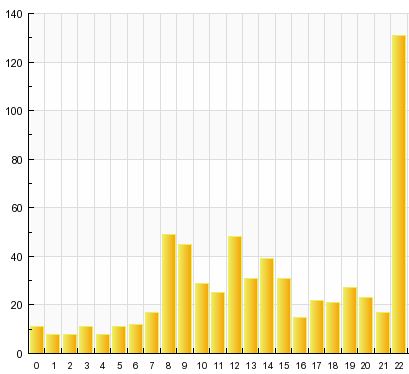
UPDATE: For bloggers, this is also a good lesson in the value of reporting breaking news.  I gained about 120 visitors in 30 mins after publishing this post.  Here’s today’s hourly traffic, note the surge at the end of this picture:

Tide, Brad Keselowski, NASCAR, Daytona 500, Twitter

Share this:

  • Share on X (Opens in new window) X
  • Share on Facebook (Opens in new window) Facebook
  • Share on LinkedIn (Opens in new window) LinkedIn
  • Email a link to a friend (Opens in new window) Email
  • Share on Reddit (Opens in new window) Reddit

Like this:

Like Loading...

Filed Under: Uncategorized

February 27, 2012 by Mack Collier

How I Leveraged Twitter to Boost My Blog’s Traffic by 41% Last Week

I’ve blogged before about how you can use Twitter as a tool to drive more attention and exposure to your blog.  I wanted to walk you through how I used Twitter to increase my blog’s traffic last week by 41% over the previous week.

First, I posted 5 times last week, Sunday-Thursday.  On Monday-Thurs, I had a very specific pattern for using Twitter to push traffic back here.

Starting at 8am each morning, I tweeted a link to the previous day’s post here.  Then I went through Google Reader and every 10 mins from 8:10-8:50 I linked to an interesting post or article.  Then at 9:00 am I linked to my new post for that day.  Then starting at 9:10 am I tweeted out a link to another post or article from someone else every 10 mins.  Usually, I stopped at 10 am.

So from 8am-10am, I tweeted a new post or article, every 10 mins.  2 of them were my posts, the rest were posts or articles other people had written.  Then I would again tweet out a link to that day’s post at noon, and again at 3pm.  Also during the day I would RT any interesting links I saw other people sharing.

Here’s what my traffic looked like 2 weeks ago, then last week:

Two weeks ago, I averaged 340 visitors a day here, last week I averaged 479.

Now this strategy works especially well for companies or individuals that are using a blog as a thought leadership tool or to build awareness.  By sharing relevant content on Twitter that’s consistent with the content I create here, there’s several benefits for me:

1 – Sharing valuable content on the same topics as I blog about helps raise my visibility around those topics.

2 – As I am sharing links, more people start paying attention to the links I am sharing, which means more traffic when I share links back here.

3 – As I share links from other bloggers, it increases the chance that they will reciprocate by RTing a link to one of my posts.


Now on Friday, I didn’t write a new blog post.  Instead, I RTed a link to the 3 most viewed posts here last week, sending out a tweet to a new post at 9am, noon, and 3pm.  This way, I didn’t have to write a new blog post on either Thurs or Friday, so it freed me up to spend that time working on other projects.

So again, here’s the system I used on Monday-Thursday:

1 – Each day, publish a new post at 8am.

2 – Starting at 8am each day, tweet out a link to a new blog post or article every 10 mins till 10am.  13 links total.

3 – Tweet out the link to the previous day’s post at 8am, the current day’s post at 9am.

4 – Tweet out another link to the current day’s post at noon and again at 3pm.

5 – Throughout the day, RT valuable links that I see others sharing.


So if you are looking for a simple way to use Twitter to drive more traffic to your blog and build visibility for yourself, try this simple format.  This is also a good way to take an activity you are already engaging in (reading your feeds in Google Reader) and use that content to build your blog’s traffic as well as your Twitter following.


PS: A few minutes ago I got an email offering to ‘sell’ me 10,000 Twitter followers for $5.  As with much in life, real results require real work.

Share this:

  • Share on X (Opens in new window) X
  • Share on Facebook (Opens in new window) Facebook
  • Share on LinkedIn (Opens in new window) LinkedIn
  • Email a link to a friend (Opens in new window) Email
  • Share on Reddit (Opens in new window) Reddit

Like this:

Like Loading...

Filed Under: Blog Analytics, Blogging, Twitter

February 26, 2012 by Mack Collier

Where Have All The Great Thought Leadership Blogs Gone?

I had an interesting back and forth with Adam the other day on Twitter about his perception that ‘social media gurus’ don’t openly disagree or challenge each other’s thoughts.  I wanted to write a post about that, but then I realized that our discussion actually dovetailed a bit into another train of thought I’ve been having lately; Where have all the great thought leadership blogs gone?

2005 and 2006 was a magical time for me.  Not only was I discovering blogging for the first time, but I was also discovering some amazing bloggers and some profoundly provocative writing on the future of marketing.  Blogs like Horse Pig Cow, Gaping Void, Church of the Customer and Creating Passionate Users inspired me on a daily basis and their thoughts got my creative juices flowing and led to some/most of my best writing.

But around 2007 or 2008, the social media/marketing blogging space began to change.  We went from discussions largely around ‘What If…’ to ‘What Is’ when it came to social media and its impact on marketing.  At the time, this change was welcomed, I remember talk around 2007 or so that we ‘needed to stop talking theory, and start sharing real-world results if we want businesses to take social media seriously’.  By 2007 and 2008, a few innovative companies were starting to produce real case studies from their early social media efforts, and almost overnight, it seems as if we all stopped talking theory, and started embracing reality.

Which is good, to a degree.  It’s wonderful that we started incorporating ‘real world’ business examples into our writings.  But in the process, I think we went too far away from what made our writings so incredibly compelling to begin with.

We stopped asking ‘What If…’

The discussion around ‘Social Business’ has been nagging at me for a while now.  Last week, someone ( I wish I could remember where I saw it) said ‘What everyone is calling ‘Social Business’ seems to just be ‘Good Business’.  Exactly.  This was what was irritating me.  There’s nothing revolutionary or ‘bleeding edge’ about ‘Social Business’.  We just took the idea of running a ‘Good’ business and swapped in the ‘Social’ modifier, and it’s as if we slapped it in a Shiny Object wrapper.

Is it vitally important that companies facilitate collaboration between their employees?  That they find ways to better connect with their customers and they with the company?  That they have tighter connections and smarter conversations with their partners/vendors?

Yes, of course, and you betcha.  But all of those things were just as important in 1912 as they are in 2012.

Back to Adam’s point, somewhere along the line, I think we stopped publicly challenging and disagreeing with each other as much as we should.  Disagreeing with someone isn’t a bad thing (unless you are being disagreeable, there’s a BIG difference), and it encourages thought to have your ideas challenged.

I think we aren’t challenging and building on each other’s ideas like we once did.  As a result, I think the entire Social Media/Marketing blogosphere/whatever has become largely stagnant.  We haven’t run out of new ideas because there’s nothing new to talk about, we’ve run out of new ideas because we aren’t pushing each other to FIND those new ideas.

In 2005 and 2006 we had The Porous Membrane to explain why Corporate Blogging worked, we had Pinko Marketing to explain how customers were more empowered than ever and Influence Ripples to explain how ideas spread and bloggers become influential online.

Today we have ‘Why Your Business Should be a Social Business’, ‘How Pinterest is Killing (Insert SM site here)’, and ‘Klout Sucks’.

Seriously?

We need to do better.  Starting today, I promise to start asking ‘What If…’ here more often.  Sure, I may sometimes make a fool out of myself in the process (Because that doesn’t happen already ;)), but I think asking the occasional question is better than acting like you have all the answers.

Share this:

  • Share on X (Opens in new window) X
  • Share on Facebook (Opens in new window) Facebook
  • Share on LinkedIn (Opens in new window) LinkedIn
  • Email a link to a friend (Opens in new window) Email
  • Share on Reddit (Opens in new window) Reddit

Like this:

Like Loading...

Filed Under: Uncategorized

  • « Previous Page
  • 1
  • …
  • 84
  • 85
  • 86
  • 87
  • 88
  • …
  • 119
  • Next Page »

Recent Posts

  • My Substack Conversion Rate Went From 0.5% to 13% in Six Months, Here’s How
  • A Solid Conversion Strategy is Vital on Substack, Here’s the Proof
  • Empathy is Your Customer Service Secret Weapon
  • Understanding Substack’s Three Growth Stages
  • Blogging Isn’t Dead, it’s Morphed Into Substack

Categories

Archives

Comment Policy

Be nice, be considerate, be friendly. Any comment that I feel doesn't meet these simple rules can and probably will be deleted.

Top Posts & Pages

  • The Real Reason Why the Mona Lisa is So Popular Will Surprise You
  • I Do Not Deserve to Suffer Like This...
  • Why Did Jesus Send His Apostles Out With Nothing?
  • Understanding Substack's Three Growth Stages
  • How Much Money Will You Make From Writing a Book?
  • Case Study: Patagonia’s Brand Ambassador Program Focuses on Product Design and Development Over Sales
  • 10 Steps to Creating a Successful Twitter Chat
  • Have You Pre-Ordered Think Like A Rock Star Yet?
  • Trust is the Currency On Which Your Content Trades
  • Use TweetDeck to track who favorites your tweets

  • Blog
  • Mack’s Bio
  • Work With Mack
  • Buy Think Like a Rock Star
  • Book Mack to Speak

Copyright © 2026 · Executive Pro Theme on Genesis Framework · WordPress · Log in

%d